
Shared Core Commonality
Interface Stress Multiplier
Datum Envelope Shift
Tooling Cost Avoidance
Cascading Parametric Dependencies & Geometric Shifts
Examining how retrofitting an active subassembly perturbs master datum planes and sibling models.
Introducing an auxiliary feature—such as an automated sensor pack, supplementary servo drive, or secondary fluid port—into an established parametric product family rarely remains an isolated modification. In solid modeling workflows, modifications to base sketches or parent mounting bosses propagate directly into every derived configuration. Designers must isolate primary datum references and deploy robust top-down skeleton models; otherwise, downstream rebuild errors immediately corrupt production-ready drawings.
When assessing existing industrial variants, retrofitting an added component causes significant structural redistributions. In our test chassis family, introducing a high-torque actuator increased local point loads near the secondary mounting flange. Rather than redesigning every enclosure independently, isolating the load path into a decoupled bolt-on subframe preserved the core casting geometry for three existing variants while absorbing dynamic vibration within acceptable fatigue limits.
Key Architecture Benchmarks
CAD Tree Integrity
99.8% Clean Rebuilds
Interface Standard
DIN EN ISO 2768-m
Chassis Part Reuse
84% Common Castings
Assembly Cycle Impact
+4.5 min per unit
Downstream Tooling & Bill-of-Materials Impacts
Beyond digital geometry, introducing a new capability impacts procurement schedules, tooling fixtures, and quality inspection regimes. When engineering teams neglect configuration governance, identical mounting brackets splinter into unnecessary custom SKUs across regional variants. Structured modularization avoids this fragmentation through strictly partitioned subassembly hierarchies.
- Decoupled feature trees prevent circular references across family configurations in PDM repositories.
- Universal fastener patterns preserve backward compatibility with legacy field-installed machinery.
- Thermal dissipation envelopes are verified to prevent hot-spot accumulation inside compact variant enclosures.
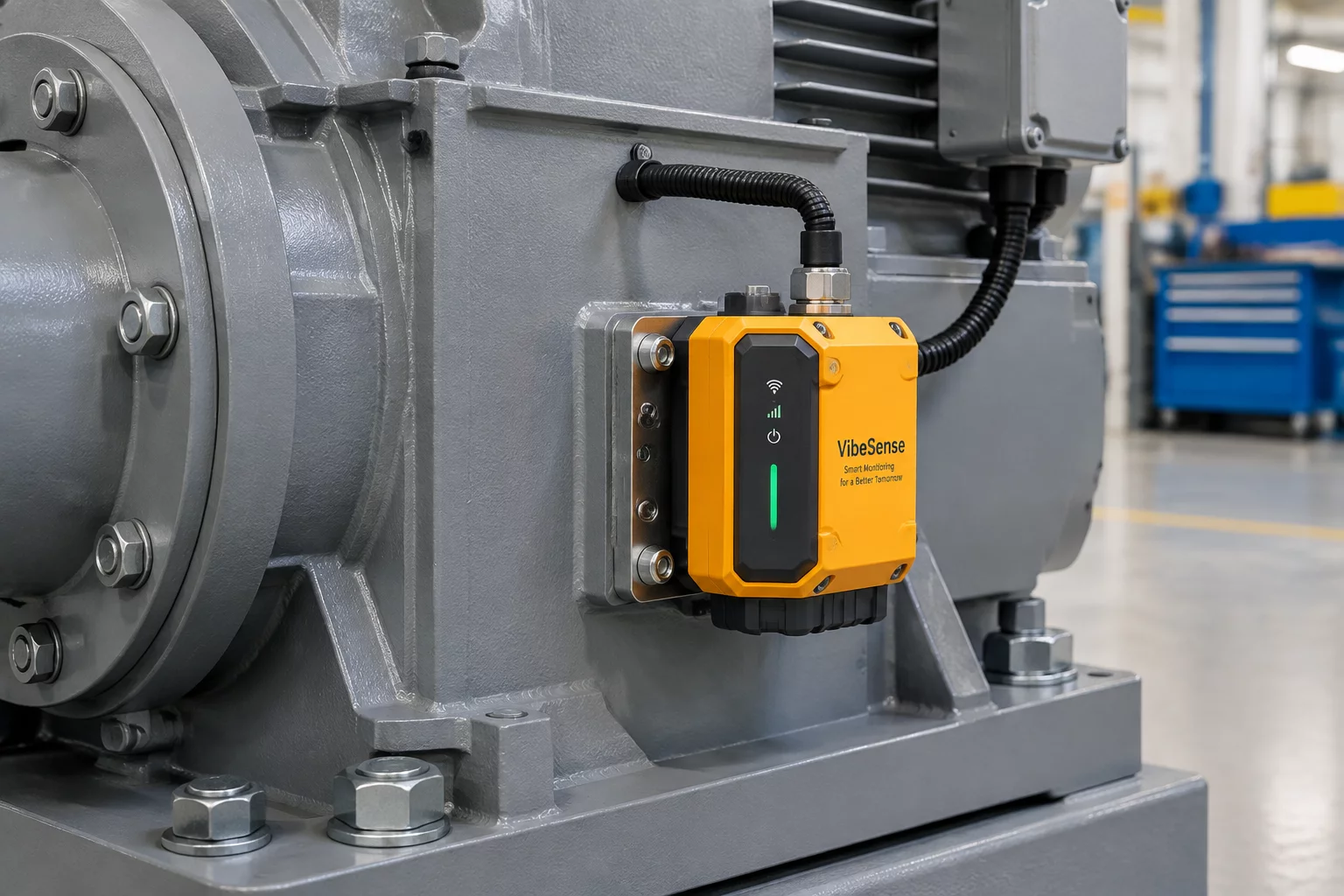
Modular sensor retrofit module integrated onto existing industrial machine housing.
Implementation Profile
Related Case Studies
Need Support with Product Line Architecture?
Our mechanical design specialists assist teams with parametric configuration structures, modular decoupling, and component standardization.
Request Variant Analysis Consultation
Submit your CAD configuration challenges for structural dependency evaluation.
Peer Discussions & Reviews
Join the technical discussion regarding configuration cascading and retrofit design.
No peer reviews submitted yet. Be the first to share an engineering observation or inquiry.
Leave a Thoughtful Contribution