

Marcus Vance
Lead Systems Architect •
Scaling down a mechanical assembly is rarely a linear dimensional reduction. Packaging constraints force engineers to swap off-the-shelf parts for custom integrated geometry.
Volume Reduction
Substituted Parts
Bearing Load Density
Unit Cost Variance
Why linear CAD scaling breaks mechanical assembly logic and drives bespoke component selection.
Engineering teams often assume a compact product variant can share the majority of its internal Bill of Materials with baseline models. However, when enclosure volume drops beyond 35%, spatial clearance for standard industrial fasteners, off-the-shelf rolling element bearings, and conventional thermal dissipators completely vanishes. This threshold forces a structural pivot from modular assembly toward monolithic integration.
In our mechanical chassis benchmark, retaining standard M4 shoulder bolts required excessive wall thickness that starved internal airflow channels. By transitioning to flush micro-fasteners and customized needle roller assemblies, the packaging volume decreased by 42% while preserving structural rigidity. The challenge lies in managing the supply chain split when high-volume standard components no longer fit the compact variant envelope.
Primary Bottleneck
Thermal Dissipation Area
Fastener Strategy
M2.5 Micro-Drive Screws
Bearing Integration
Direct-Bore Raceways
Material Selection
7075-T6 Anodized Alloy
Deciding between component miniaturization and architectural redesign requires balancing upfront tooling investments against downstream assembly ergonomics. When individual part sizes decrease, assembly cycle times often lengthen due to stricter alignment tolerances and specialized optical inspection requirements.
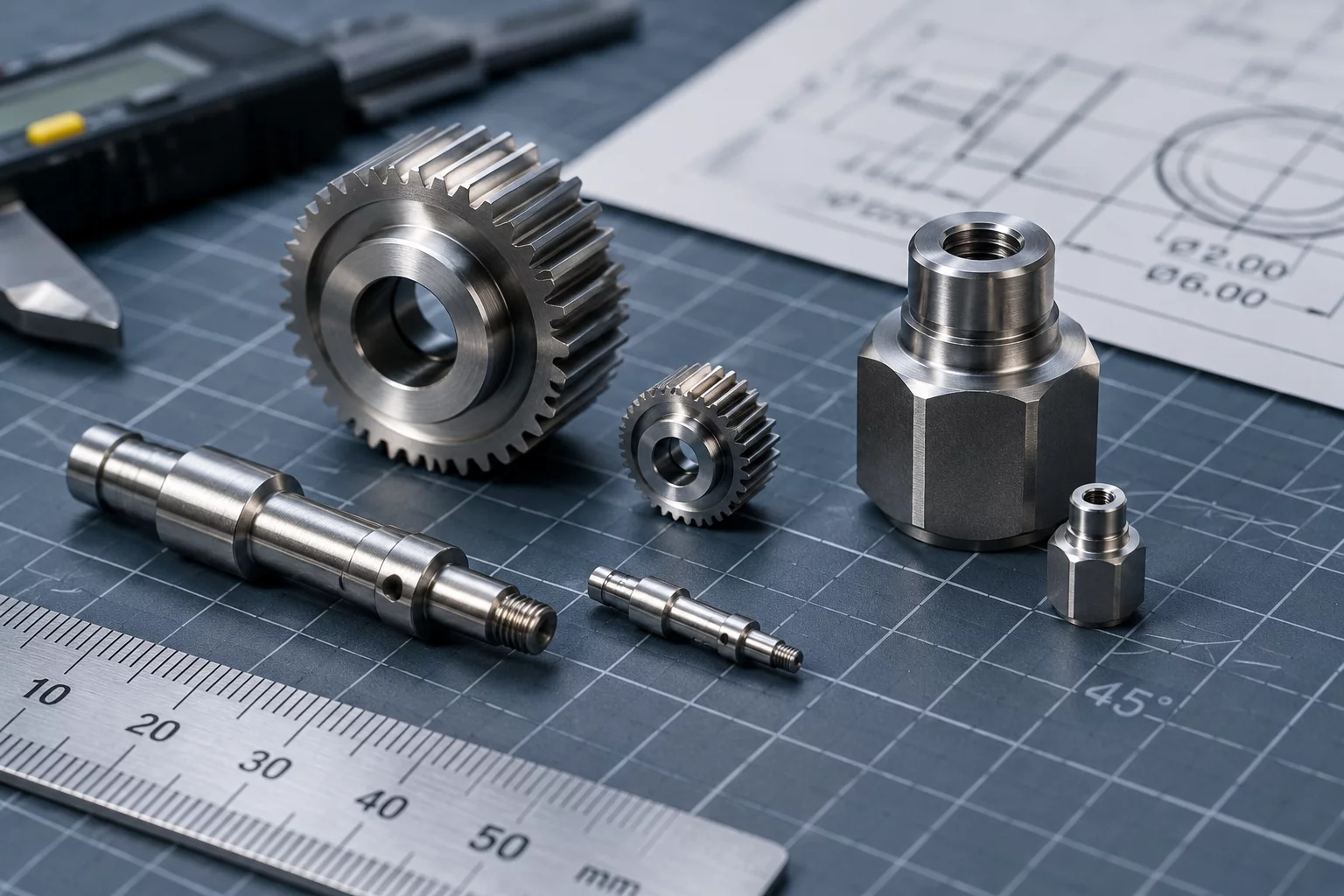
Direct comparative study between baseline M4 architecture and the integrated micro-component compact envelope.
Consult with our variant structuring specialists to optimize your modular architectures and avoid costly re-tooling.
Join the academic discourse regarding this component analysis.
Lead Systems Architect •
Author •
We tested thin-section bearings during Phase 1 prototyping, Marcus. While they preserved standard assembly workflows, the radial envelope was still 3.2 mm too wide for our outer sealed flange. Direct induction-hardened bores proved more cost-effective once we stabilized our 5-axis CNC fixtures.

Did your team evaluate thin-section angular contact bearings before committing to direct-bore raceways? In our recent optical mount project, machining tolerances for direct raceways tripled scrap rates.