
Dynamic Load Capacity
Pinion Core Material
Ingress Protection Rating
Mean Time to Failure (MTTF)
Structural Geometry and Mechanical Reinforcement Discrepancies
Contrasting stress concentrations, wall thickness distribution, and shaft stiffness between standard and heavy-duty configurations.
When scaling a baseline mechanical actuator into a severe-duty variant, dimensional envelopes frequently remain constrained while load targets increase significantly. In this comparative teardown, the standard unit utilizes an extruded 6063-T6 aluminum housing with an average wall thickness of 3.2 mm, tailored for clean room automation and moderate cycle rates. In contrast, the heavy-duty version upgrades to a die-cast A380 aluminum shell with ribbed stiffeners and a localized 6.5 mm thickness along the main thrust axis, dramatically reducing deflection under asymmetric cantilever moments.
Internally, the lead screw assembly undergoes a fundamental architectural pivot. The baseline version employs a rolled carbon steel trapezoidal screw with a self-lubricating POM composite nut, balancing cost-effectiveness with low acoustic signature. The severe-duty counterpart substitutes this with an induction-hardened alloy ball screw (42CrMo4) coupled to preloaded gothic-arch recirculating ball nuts. This change yields a 3.4-fold increase in axial stiffness and eliminates slip-stick phenomena during high-frequency reversal operations under continuous 4.5 kN thrust loads.
Key Engineering Differential Metrics
Housing Tensile Yield
215 MPa vs 160 MPa
Drive Efficiency
92% (Ball) vs 48% (Acme)
Total Unit Mass
3.42 kg vs 2.15 kg
Max Thermal Dissipation
140 W vs 65 W
Operational Trade-Offs, Failure Modes, and Manufacturing Synthesis
Finite element simulation and accelerated endurance testing reveal distinct wear trajectories between the two models. While the reinforced version delivers superior fatigue resistance and thermal dissipation across extreme ambient temperatures (-25°C to +85°C), it introduces tighter machining tolerance demands on mounting surfaces to prevent premature bearing race spalling.
- Standard Variant: Optimized for low inertia, swift acceleration profiles, and cost-effective batch machining in benign industrial settings.
- Heavy-Duty Variant: Features dual tapered roller bearing arrangements that absorb multi-axis shock loads up to 12.8 kN without brinelling.
- BOM and Production Impact: Shared motor faceplate and digital encoder subassemblies retain 64% component commonality despite divergent load ratings.
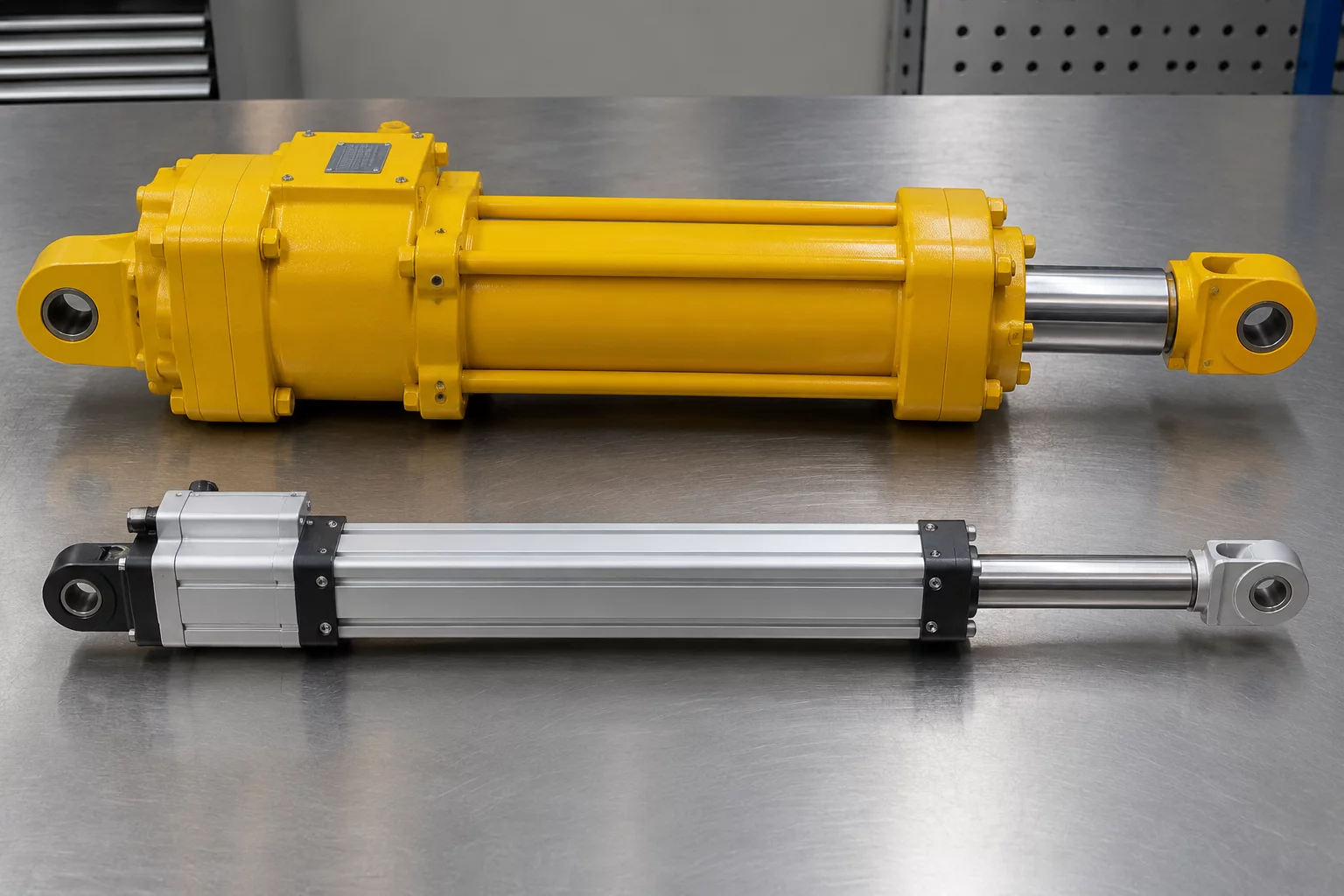
Cross-sectional CAD comparison illustrating bearing housing geometry and screw lead pitches.
Variant Architecture Specs
Related Variant Case Studies
Optimizing Your Next Product Variant Architecture?
Discuss your mechanical load envelopes, CAD configuration matrices, and material selections with our engineering consultants.
Peer Discussions & Peer Reviews
Join the academic discourse regarding this component analysis.
Leave a Thoughtful Contribution