
Debinding Purity
Dynamic Viscosity
Residual Carbon Ash
Max Sintering Temp
Formulation Chemistry & Rheological Stability
Tailoring polyalkylene carbonate carriers for simultaneous oxide ceramic and powder metallurgy wetting
Multi-material additive manufacturing requires binder chemistries capable of wetting contrasting surface energies. Oxide ceramics such as zirconia and alumina exhibit distinctly different surface charges and hydroxyl group densities compared to stainless steel or titanium alloy powders. This binder formulation balances modified polyalkylene carbonates with low-volatility glycol ether carriers, ensuring consistent droplet formation across piezoelectric printheads while maintaining uniform powder bed capillary penetration across heterogeneous material layers.
Capillary action during jetting determines the green part structural integrity. By incorporating specialized silane coupling surfactants, the binder reduces fluid contact angles across both non-polar metallic surfaces and polar ceramic particulates. Consequently, the green density achieves over 62% theoretical packing without inducing differential segregation during initial droplet impact.
Core Chemical & Rheological Specifications
Carrier Matrix
Polyalkylene Carbonate
Surface Tension
28.5 mN/m @ 25°C
Flash Point
118°C Closed Cup
Burnout Range
240°C – 380°C
Thermal Debinding & Co-Sintering Performance
The primary obstacle in ceramic-metal multi-material printing is unequal thermal shrinkage and carbon contamination during the thermal extraction phase. Traditional wax-polymer binders often leave carbonaceous residues that degrade metallic ductility and induce micro-cracks along ceramic interfaces. This binder volatilizes cleanly into carbon dioxide and moisture under inert argon or vacuum atmospheres, mitigating localized stress concentrations during solid-state diffusion.
- Clean, zero-residue thermal decomposition minimizes carbide precipitation along metal grain boundaries.
- Controlled capillary evaporation prevents localized delamination at the ceramic-to-metal phase gradient.
- High atmospheric adaptability supporting argon, hydrogen, and vacuum furnace cycles up to 1380°C.
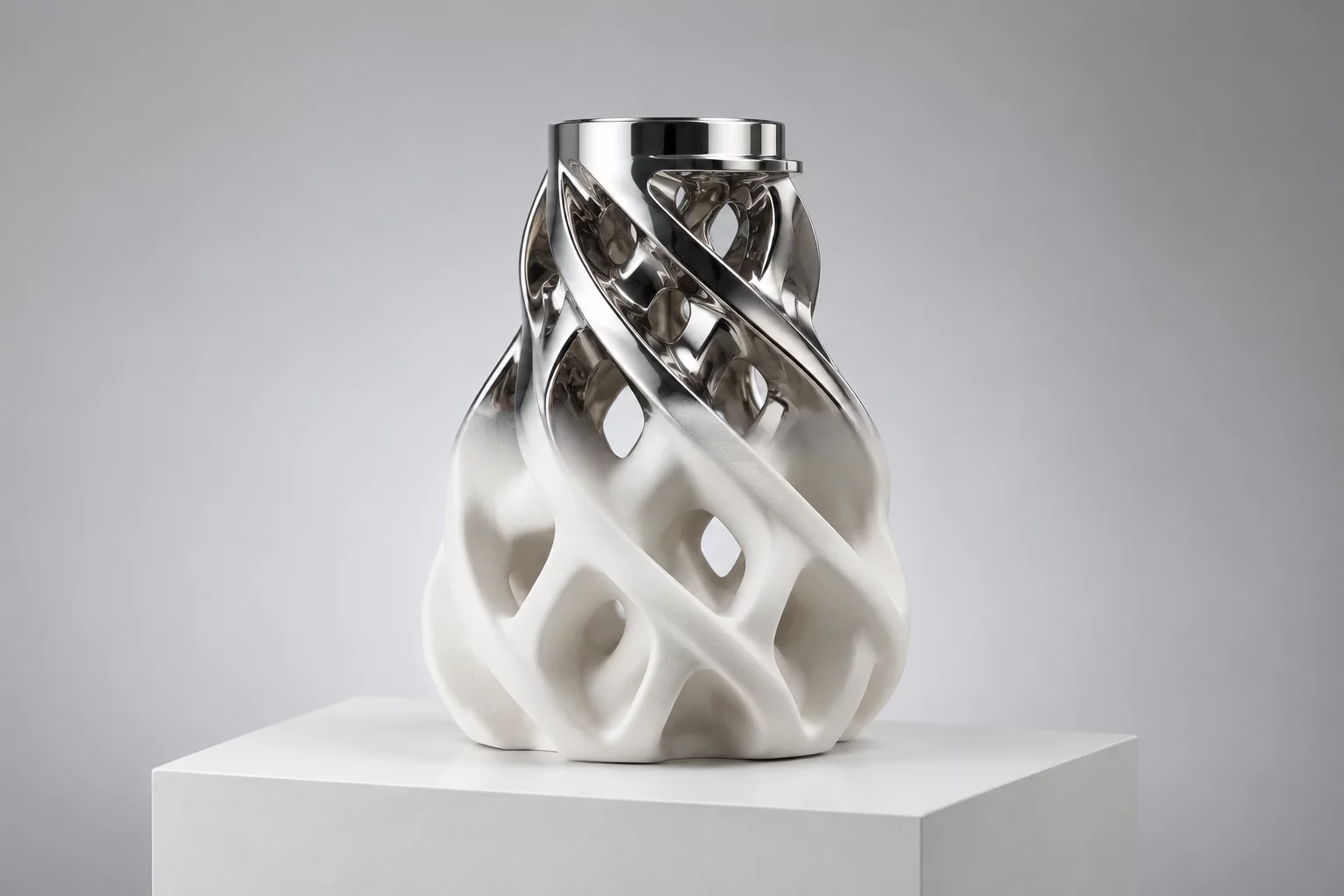
Microstructural gradient of consolidated ceramic-to-metal specimen following controlled binder debinding.
Technical Properties
Related Material Analyses
Custom Binder Formulation Inquiries
Consult with our materials engineering desk for bespoke wetting profiles, multi-phase debinding thermal curves, and feedstock compatibility studies.
Peer Discussions & Peer Reviews
Join the academic discourse regarding this component analysis.
No comments yet. Be the first to leave a technical observation or question.
Leave a Thoughtful Contribution