

Dr. Elena Rostova
Lead Systems Architect •
Investigating next-generation rapid-cure HexPly prepregs, out-of-autoclave structural fabrics, and acoustic honeycomb dampening cores engineered for high-cadence aerospace and automotive manufacturing.
Cycle Time
Specific Rigidity
Glass Transition Tg
Tooling Footprint
Evaluating the thermal and kinetic profiles of modern fast-cure epoxy resins showcased during CAMX.
At CAMX 2026, the advanced composites sector highlighted a decisive transition from protracted autoclave processing toward ultra-fast compression molding and out-of-autoclave infusion. Central to this milestone is Hexcel's latest HexPly M79 and M56 resin portfolio, developed specifically to mitigate thermal stress concentrations and shorten debulking cycles without relinquishing interlaminar shear resilience.
The structural core demonstrations confirmed that engineered honeycomb subassemblies, bonded with specialized phenolic film adhesives, can achieve acoustic attenuation targets while eliminating parasitic deadweight in commercial aerostructures. Modern tooling workflows now accommodate tight contour radiuses through optimized weave architecture, preventing dry-spot voids during rapid resin transfer.
Tensile Modulus
294 GPa (HexTow IM7)
Cure Window
190s at 150 °C
Core Density
48 kg/m³ Acousti-Cap
Out-Time Stability
60 Days at 21 °C
Adopting high-temperature snap-cure matrices requires precise thermo-kinetic monitoring. While these formulations substantially shrink production cycle bottlenecks, manufacturing engineers must counter microcracking tendencies caused by accelerated exothermic peaks.
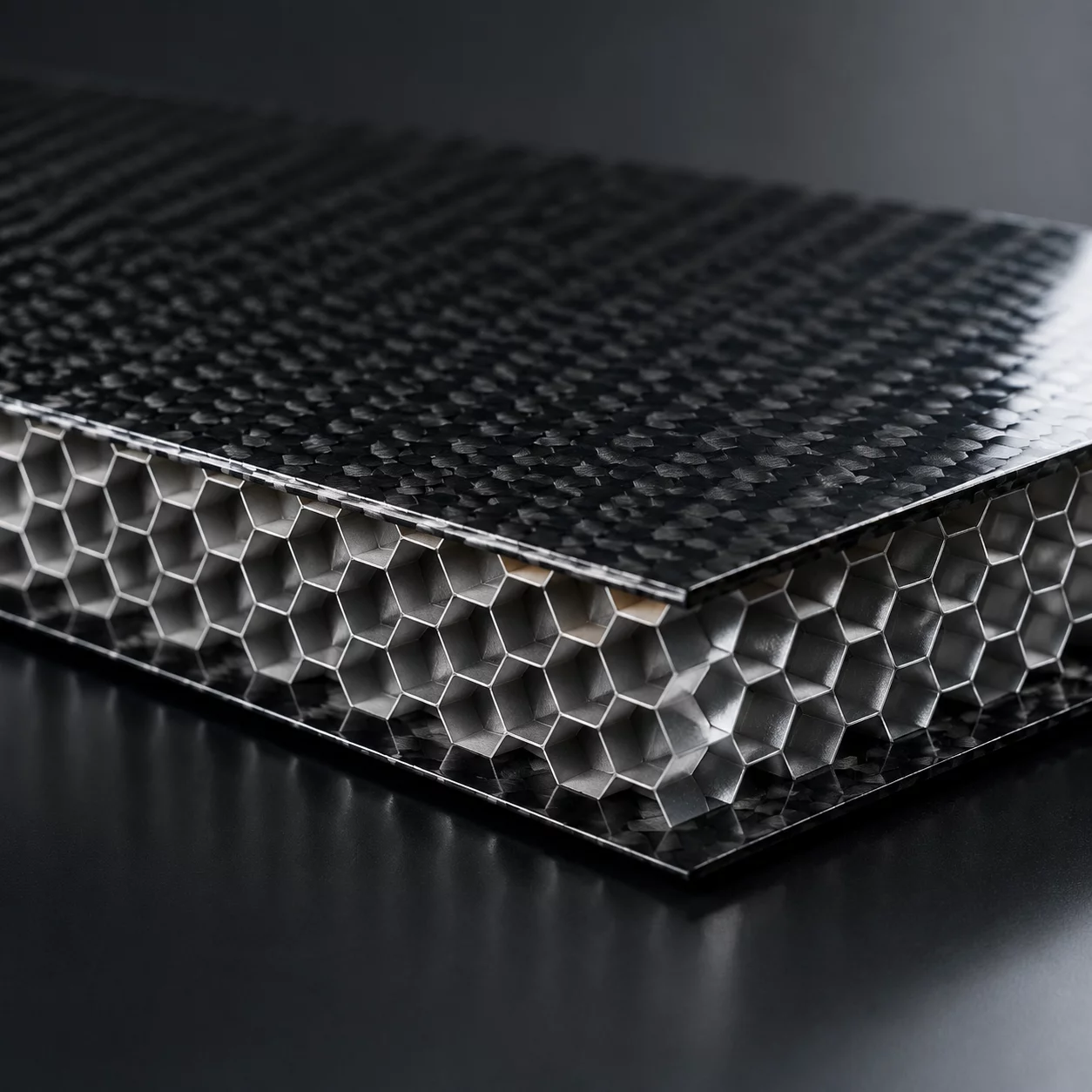
Hexcel honeycomb core composite sample showcasing cellular precision and carbon-reinforced surface integration.
Consult our materials engineers to benchmark out-of-autoclave prepregs against conventional autoclave resin systems for your parametric CAD product line.
Join the academic discourse regarding this component analysis.
Lead Systems Architect •
Author •
Elena, the hot-wet retention curves presented by the material science team demonstrate less than 4% shear strength degradation after 1000 hours at 70 °C and 85% RH, largely credited to their proprietary coupling agent treatments.

The transition toward out-of-autoclave M79 prepregs directly resolves thermal warping issues in thin-walled aero cowlings. Have you observed any degradation in fiber-matrix interface bonding under prolonged cyclic humidity exposure?